29LV320 technical information, including its features and specifications is available in this post. It belongs to the 29LV series, which is designed for high-speed, low-voltage read/write operations with electrically erasable programmable memory (EEPROM/Flash).
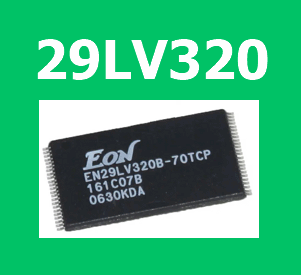
Part Number: EN29LV320B-70TCP
Function: 32 Megabit Flash Memory
Package: TSSOP 48 Pin, FBGA 48 ball.
Manufacturer: Eon Silicon Solution
Image:
Description
The 29LV320 is a 32-Megabit, electrically erasable, read/write non-volatile flash memory, organized
as 4,194,304 bytes or 2.097,152 words. Any word can be programmed typically in 8µs. The
EN29LV320 features 3.0V voltage read and write operation, with access times as fast as 70ns to
eliminate the need for WAIT states in high-performance microprocessor systems.
The EN29LV320 has separate Output Enable (OE#), Chip Enable (CE#), and Write Enable (WE#)
controls, which eliminate bus contention issues. This device is designed to allow either single Sector or full Chip erase operation, where each Sector can be individually protected against program/erase
operations or temporarily unprotected to erase or program. The device can sustain a minimum of 100K program/erase cycles on each Sector.
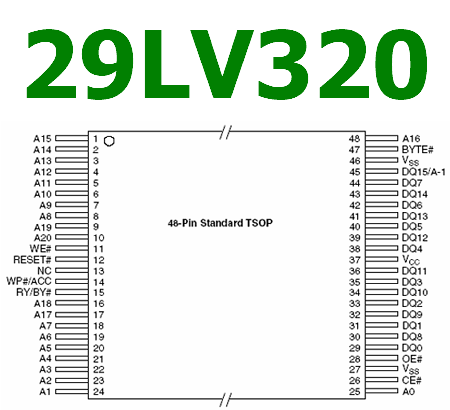
Pinout
Features
• Single power supply operation – Full voltage range: 2.7 to 3.6 volts read and write operations
• High performance – Access times as fast as 70 ns
• Low power consumption (typical values at 5 MHz)
(1) 9 mA typical active read current
(2) 20 mA typical program/erase current
(3) Less than 1 µA current in standby or automatic sleep mode
• Standard DATA# polling and toggle bits feature
• Unlock Bypass Program command supported
• Erase Suspend / Resume modes:
(1) Read and program another Sector during Erase Suspend Mode
• Support JEDEC Common Flash Interface (CFI).
Applications
1. Embedded firmware storage: Microcontroller boot code or system firmware
2. Consumer electronics: Digital cameras, MP3 players, set-top boxes
3. Industrial systems: PLCs and instrumentation requiring non-volatile memory
4. Data logging: Retains historical data even without power
[ … ]
29LV320 PDF File
